Layer Survey - List of Manufacturers, Suppliers, Companies and Products | IPROS

Layer Survey Product List

1~4 item / All 4 items

Displayed results

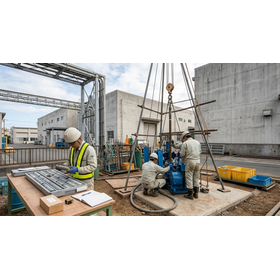
Logistics Warehouse Pile Length Optimization | Geotech for Small Steel Frame Buildings

Achieving seismic reinforcement of logistics warehouses safely and economically through neighboring databases and precise on-site surveys.

In seismic reinforcement of logistics warehouses, balancing stability and future potential is essential. In urban areas and densely populated infrastructure locations, the difficulty of bringing in large machinery often leads to insufficient ground surveys, resulting in risks such as misidentification of support layers and excessive pile length design. Geotech combines the analysis of the metropolitan area's ground information database "GEODAS" with precise on-site surveys using small self-propelled machines. By correlating surrounding data with sounding results, it accurately identifies support layers even in complex ground conditions. This allows for the calculation of optimal pile lengths without excess or deficiency, ensuring necessary bearing capacity while achieving cost reductions. 【Usage Scenarios】 - Logistics warehouses in urban areas or densely populated infrastructure locations - Sites where large machinery cannot be brought in due to limited space - Seismic reinforcement work for existing buildings - Complex ground cases where understanding support layers is challenging

  • others
  • Layer Survey

Added to bookmarks

Bookmarks list

Bookmark has been removed

Bookmarks list

You can't add any more bookmarks

By registering as a member, you can increase the number of bookmarks you can save and organize them with labels.

Free membership registration

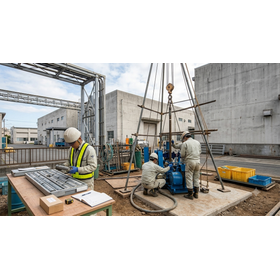
[For Design Offices] Geotech | Optimization of Pile Length for Steel Frame Buildings on Narrow Sites

Optimize pile length for small sites using neighboring data and on-site surveys.

In the design of steel frame buildings on small urban sites, the difficulty of bringing in large machinery due to restrictions from adjacent buildings and road widths poses a risk of inadequate understanding of the inclination of the support layer, leading to excessive pile length design. Our GeoTech combines the analysis of neighboring data from the ground information database "GEODAS," accumulated in the metropolitan area, with precise on-site surveys using small self-propelled machines, to address these challenges. By analyzing surrounding boring column diagrams and N-value distributions in advance, we conduct sounding tests tailored to site constraints. By correlating both sets of data, we identify complex variations in layer thickness and the depth of local support layers, allowing us to calculate the optimal pile length without excess or deficiency. This achieves a balance between reducing material and construction costs while ensuring the necessary allowable bearing capacity for the structure. 【Application Scenarios】 - Small urban sites - Sites with narrow front roads or delivery routes - Cases where adjacent buildings are in close proximity - Situations where the inclination and depth of the support layer are unclear 【Benefits of Implementation】 - Cost reduction by preventing excessive design - Reliable assurance of the necessary bearing capacity for structures - Realization of ground surveys in confined spaces - Balancing safety and economy

  • others
  • Layer Survey

Added to bookmarks

Bookmarks list

Bookmark has been removed

Bookmarks list

You can't add any more bookmarks

By registering as a member, you can increase the number of bookmarks you can save and organize them with labels.

Free membership registration

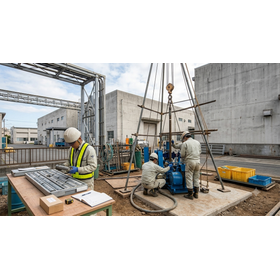
Optimize pile length of small buildings using neighboring data and on-site surveys.

Identifying the supporting layer of a narrow site through neighboring data and on-site surveys. Preventing excessive design and achieving economical and safe optimization of pile length.

In urban areas and on narrow sites, the construction of steel frame buildings often faces difficulties in transporting large boring machinery due to restrictions from adjacent buildings and road widths, making it challenging to grasp the support layers. GeoTech combines the analysis of neighboring data from its geotechnical information database "GEODAS," accumulated in the metropolitan area, with precise on-site surveys using small self-propelled machines. By analyzing surrounding boring column diagrams and N-value distributions in advance, they conduct sounding tests tailored to site constraints. By correlating both data sets, they can accurately identify the depth of support layers even in complex ground conditions, calculating the optimal pile length without excess or deficiency. This approach balances the reduction of material and construction costs with the necessary support strength for structures, achieving an economical and safe design. 【Usage Scenarios】 - Construction of steel frame buildings on narrow urban sites - Sites with narrow access roads or transport routes - Situations requiring consideration of the impact of adjacent buildings

  • others
  • Layer Survey

Added to bookmarks

Bookmarks list

Bookmark has been removed

Bookmarks list

You can't add any more bookmarks

By registering as a member, you can increase the number of bookmarks you can save and organize them with labels.

Free membership registration

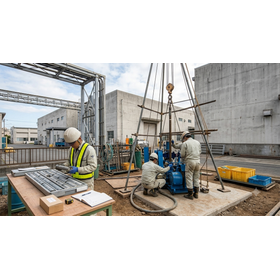
Geotech | Optimization of Pile Length for Steel Frame Buildings on Narrow Sites

Optimize pile length for narrow sites using adjacent data and on-site surveys.

In urban areas with limited space, restrictions on the use of large machinery can lead to issues such as decreased accuracy in ground assessments and increased costs due to excessive design. Geotech addresses these challenges by combining neighboring data analysis with precise on-site surveys, accurately capturing the support layers and determining the necessary pile lengths. 【Usage Scenarios】 - Building construction on small urban lots - When adjacent buildings are in close proximity - When the width of the front road is narrow 【Benefits of Implementation】 - Cost reduction by preventing excessive design - Reliable assurance of the necessary support strength for structures - Balancing safety and economic efficiency

  • others
  • Layer Survey

Added to bookmarks

Bookmarks list

Bookmark has been removed

Bookmarks list

You can't add any more bookmarks

By registering as a member, you can increase the number of bookmarks you can save and organize them with labels.

Free membership registration